
When people shop for a watch, they usually focus on the movement, brand, style, or water resistance. But one of the most important parts of any watch is right in front of you: the crystal, or the transparent cover that protects the dial. If you have ever owned a watch that looked worn out after only a few months, there is a good chance the crystal played a major role.
The sapphire vs mineral crystal debate matters because watch glass affects how your watch looks, how well it holds up to everyday wear, and how satisfied you will be with your purchase over time. A great-looking watch can lose its appeal quickly if the crystal picks up scratches, glare, or damage. Understanding the difference helps you choose a watch that fits both your lifestyle and your budget.
What Is Watch Crystal?
Despite the name, watch crystal is not usually made from natural crystal. In modern watches, the term refers to the transparent protective layer over the dial. The two most common types are mineral crystal and sapphire crystal. Each has strengths and weaknesses, and neither is automatically best for every buyer.
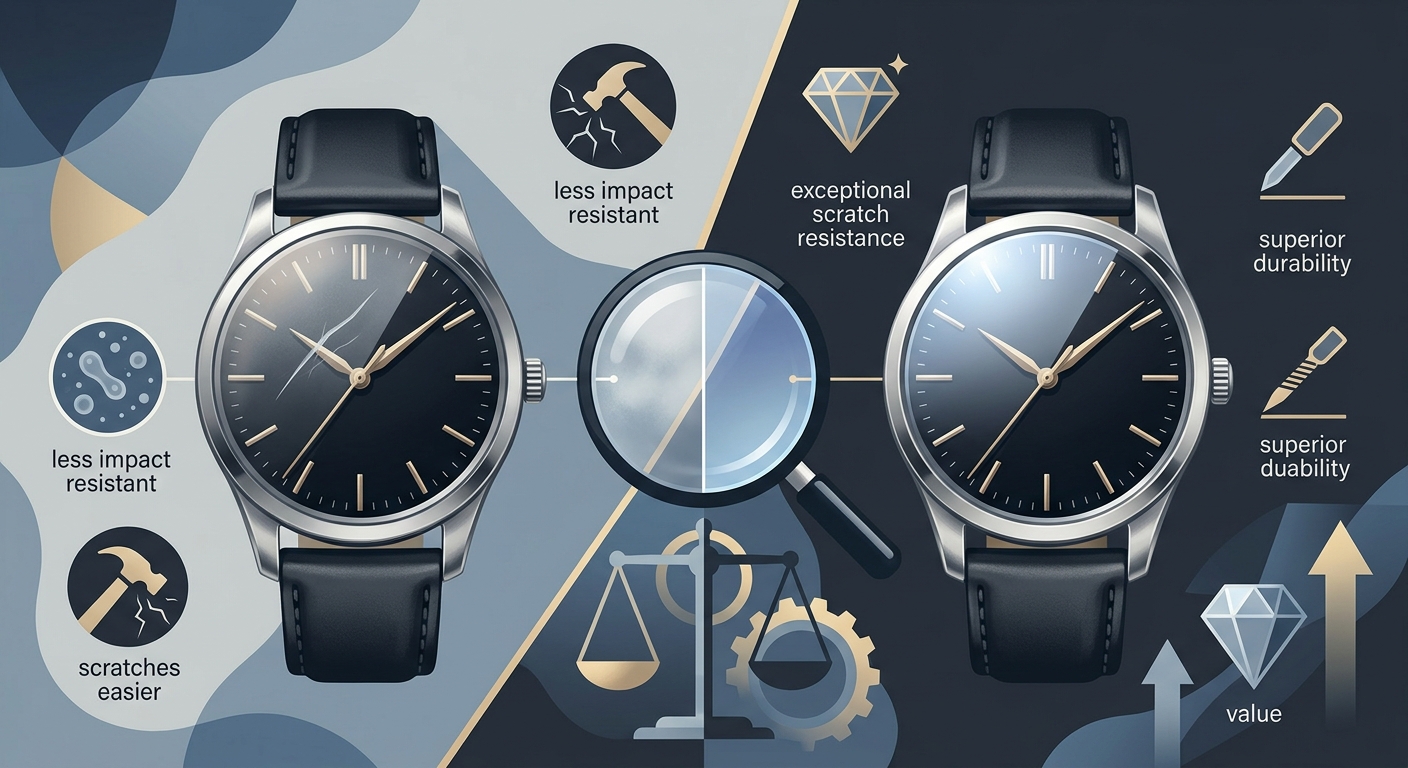
Mineral crystal is a specially hardened glass. It is widely used in affordable and mid-range watches because it offers a solid balance of cost, clarity, and durability. Sapphire crystal is a synthetic material made from crystallized aluminum oxide. It is prized for its exceptional scratch resistance and is commonly found on premium watches.
Why Watch Glass Matters More Than Many Buyers Realize
It affects how your watch looks over time
The dial is the face of the watch, and the crystal is what you look through every time you check the time. If that surface gets scratched up, cloudy, or chipped, the entire watch can look older than it really is. Even an expensive watch can lose its visual appeal if the glass is visibly worn.
It influences long-term value
A watch with a crystal that stays clear and clean often feels newer for longer. That matters whether you plan to keep the watch for years or eventually resell it. Buyers tend to notice scratched crystals immediately, and that can lower perceived value.
It changes the wearing experience
Clarity and glare reduction affect readability. Scratch resistance affects peace of mind. Impact behavior affects how suitable the watch is for active use. The crystal is not just a cosmetic detail; it changes how enjoyable the watch is to wear every day.
Sapphire Crystal: Pros and Cons
Sapphire crystal is best known for one thing: scratch resistance. It ranks very high on the hardness scale, which means it resists most everyday scratches far better than mineral crystal. Keys, desk surfaces, door handles, and other common contact points are much less likely to leave visible marks.
Benefits of sapphire crystal
- Excellent scratch resistance: Ideal for buyers who want their watch to keep a clean, premium look.
- Premium feel: Sapphire is often associated with higher-end watches and stronger long-term quality.
- Great clarity: When paired with anti-reflective coating, sapphire can look especially crisp and sharp.
Potential drawbacks of sapphire crystal
- Higher cost: Watches with sapphire crystal usually cost more.
- Can be more brittle under hard impact: While it resists scratches extremely well, sapphire can be more prone to shattering than mineral glass in certain severe impacts.
- Reflective if untreated: Some sapphire crystals can create noticeable glare unless anti-reflective coating is included.
For office wear, daily wear, dress watches, and anyone who hates visible scratches, sapphire is often the more satisfying choice.
Mineral Crystal: Pros and Cons
Mineral crystal is a practical and common choice that works well for many buyers. It is tougher than standard glass and more affordable than sapphire, which helps keep the overall watch price down.
Benefits of mineral crystal
- Lower cost: A good option for budget-conscious shoppers.
- Good impact resistance: Mineral crystal can handle knocks reasonably well and is often considered less likely to shatter than sapphire under certain impacts.
- Widely available: Common across many sports, casual, and entry-level watches.
Potential drawbacks of mineral crystal
- More prone to scratches: Everyday wear can leave marks over time.
- Can look worn faster: Once scratched, the crystal may reduce the watch’s overall appearance.
- Less premium perception: Many enthusiasts see sapphire as the more desirable material.
Mineral crystal can still be the right choice if you want a reliable watch at a better price or if you tend to replace watches more often instead of keeping one for many years.
Sapphire vs Mineral Crystal: Which Is Better for You?
The best crystal depends on how you wear your watch. There is no single answer for every shopper, but there are some clear patterns.
Choose sapphire crystal if:
- You want the best scratch resistance possible.
- You plan to wear the watch often for years.
- You care about maintaining a clean, like-new appearance.
- You are buying a watch as a long-term investment in quality and enjoyment.
Choose mineral crystal if:
- You want to keep costs down.
- You need a solid everyday watch without paying a premium for materials.
- You prioritize value and practicality over luxury details.
- You are buying a watch for occasional wear or rougher use where replacement cost matters.
Practical Tips Before You Buy
Think about your real lifestyle, not your ideal one
If your watch will spend most of its time at a desk, in meetings, at dinners, or during commuting, sapphire often makes sense because it will stay looking sharp. If you are active, hands-on, or buying a more affordable sports watch, mineral crystal may be perfectly acceptable.
Check for anti-reflective coating
Crystal material is important, but visibility matters too. Some watches, especially those with sapphire crystal, benefit greatly from anti-reflective coating. This helps reduce glare in bright sun or indoor lighting and can make the dial easier to read.
Do not judge quality by crystal alone
Sapphire is a strong selling point, but it should not be the only reason you buy a watch. Look at water resistance, movement type, bezel construction, case material, lume, strap or bracelet quality, and brand reputation too. A better crystal does not automatically make the entire watch better.
Consider total ownership cost
A lower-priced watch with mineral crystal may seem like the best value upfront, but frequent visible scratching can make it feel old quickly. On the other hand, if you are hard on your watches and prefer affordable replacements, mineral crystal may still deliver better real-world value for you.
What to Look for When Buying a Watch
- Crystal type clearly listed: Make sure the product specs explicitly say sapphire crystal or mineral crystal.
- Use case: Match the watch to daily wear, office wear, travel, sport, or special occasions.
- Dial legibility: A beautiful crystal is only helpful if the watch is easy to read in real conditions.
- Case size and design: Larger watches create more crystal surface area, which makes scratch resistance and glare even more noticeable.
- Brand trust: Established watchmakers often provide better finishing, better sealing, and more consistent quality control.
- Overall value: Evaluate the full package rather than one feature in isolation.
The Bottom Line
If you want a watch that keeps its polished appearance with minimal visible wear, sapphire crystal is usually worth paying more for. If you want a dependable watch at a more accessible price and can accept that scratches may appear over time, mineral crystal remains a sensible choice. The right answer comes down to how often you wear your watch, how rough your daily routine is, and how much long-term appearance matters to you.
Once you know which crystal type fits your needs, it becomes much easier to narrow down watches that deliver the right mix of durability, style, and value. The next options are worth a closer look if you are ready to compare well-known watches that balance design, build quality, and everyday wearability.
Our Top Recommendations
Based on this guide, here are hand-picked products from our partners that we recommend:


We may earn a commission if you buy through these links, at no extra cost to you.