
Choosing between an automatic and a quartz watch is one of the biggest decisions a watch buyer can make. Both can look fantastic on the wrist, both can be reliable, and both can offer excellent value. The right choice comes down to how you plan to wear the watch, how much maintenance you are comfortable with, and what you want the watch to say about your style.
If you are buying your first serious watch, upgrading from a basic everyday piece, or shopping for a gift, understanding the differences can help you avoid overspending on features you do not need or missing out on the qualities you will appreciate most. Here is how automatic and quartz watches compare in real life.
Automatic vs Quartz: What Is the Difference?
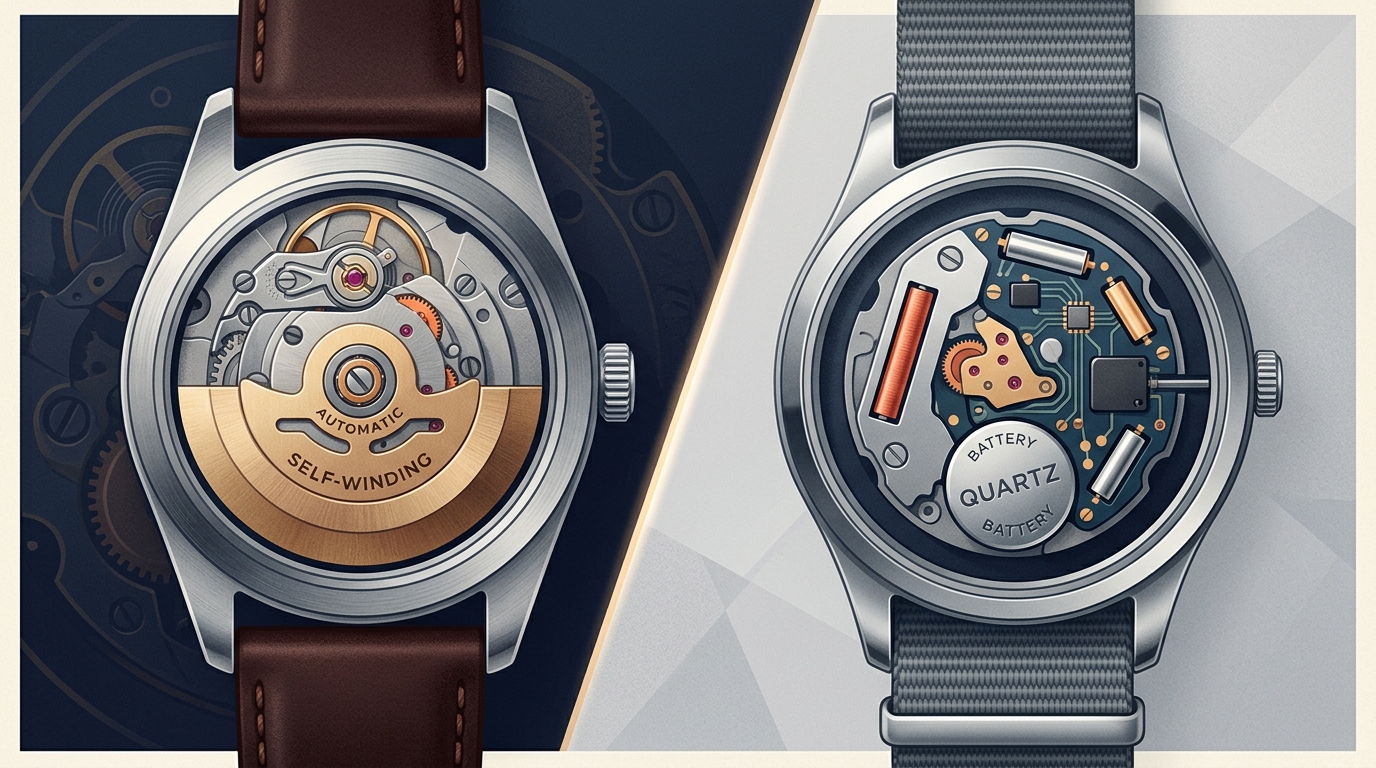
An automatic watch is a mechanical watch powered by movement. As you wear it, a rotor inside the case winds the mainspring, which stores energy and keeps the watch running. No battery is required, but the watch must be worn regularly or wound to stay powered.
A quartz watch uses a battery and a quartz crystal to keep time. The battery sends electricity through the crystal, which vibrates at a precise frequency and drives the watch movement. This system is why quartz watches are known for strong accuracy and low maintenance.
In simple terms, automatic watches are admired for craftsmanship and mechanical appeal, while quartz watches are valued for convenience and precision.
Why the Choice Matters
Accuracy
If you want a watch that keeps highly precise time with minimal adjustment, quartz usually wins. Most quartz watches lose or gain only a few seconds per month. Automatic watches typically vary more, often by several seconds per day depending on the movement, wearing habits, and regulation.
For buyers who need grab-and-go reliability, quartz can be the more practical option. For buyers who enjoy the character of a mechanical movement, a little variation may be part of the charm.
Maintenance and Convenience
Quartz watches are easier to live with. Replace the battery when needed, keep the watch clean, and it will usually ask very little from you. Automatic watches require more attention. If you rotate between several watches, an automatic may stop when not worn for a day or two, meaning you will need to reset the time and sometimes the date.
Automatic watches also benefit from periodic servicing to keep the movement healthy over the long term. That extra care is part of ownership, and some enthusiasts genuinely enjoy it. Others simply want a watch that works every time they reach for it.
Feel and Ownership Experience
This is where automatic watches often stand out. Many buyers love the smooth sweep of the seconds hand, the visible movement through an exhibition caseback, and the idea of wearing a tiny machine powered by motion. An automatic watch can feel more special, more traditional, and more connected to watchmaking history.
Quartz watches, on the other hand, tend to appeal to people who prioritize ease, value, and everyday practicality. They are often thinner, lighter, and more affordable for the same exterior quality level.
Cost Over Time
Quartz watches are often less expensive upfront, though premium quartz models certainly exist. Automatic watches generally cost more because the movement is more complex to make and assemble. Long term, quartz battery changes are usually inexpensive, while automatic servicing can cost more but may help a quality watch last for many years.
If your budget is limited, quartz typically stretches your money further. If you see your watch as a hobby purchase as well as a tool, automatic can be worth the extra investment.
Who Should Buy an Automatic Watch?
An automatic watch is usually the better choice if you value craftsmanship and want a watch with personality. It is especially appealing if you enjoy the idea of mechanical engineering on your wrist and plan to wear the watch often enough to keep it running.
- You appreciate traditional watchmaking and mechanical movements.
- You want a watch that feels more like an enthusiast piece.
- You wear the same watch most days or do not mind setting it when needed.
- You like details such as exhibition casebacks, sweeping seconds hands, and the story behind the movement.
- You are comfortable with occasional servicing as part of ownership.
Automatic watches can also make strong statement pieces. They often attract buyers who want their watch to feel substantial, stylish, and conversation-worthy rather than purely functional.
Who Should Buy a Quartz Watch?
A quartz watch is usually the smarter choice if you want dependable timekeeping with minimal effort. It is ideal for busy routines, occasional wear, travel, and buyers who prefer practicality over mechanical romance.
- You want excellent accuracy without regular adjustment.
- You prefer low-maintenance ownership.
- You rotate between multiple watches and do not want to reset one every time.
- You want strong value at a lower price point.
- You need a reliable everyday watch for work, commuting, or general use.
Quartz is also a great option for first-time buyers who are not yet sure how deep they want to go into watch collecting. It removes friction and gives you an easy watch to live with day after day.
Practical Tips Before You Buy
Think About How Often You Will Wear It
If the watch will be your main daily wearer, automatic becomes more practical because your wrist motion will help keep it wound. If it will be one watch in a rotation, quartz may save you hassle.
Be Honest About Maintenance
Some buyers are drawn to automatic watches without realizing they need more attention. If you know you want a set-it-and-forget-it experience, quartz is likely the better fit. If interacting with the watch sounds enjoyable, automatic may be more satisfying.
Match the Movement to the Occasion
For office wear, dress use, or style-first buying, either movement can work. For sports, travel, and fast-paced everyday wear, quartz often has the edge in convenience. For collectors, gifting, or personal milestone purchases, automatic often feels more meaningful.
Do Not Judge by Movement Alone
A watch is more than its movement. Case size, dial readability, water resistance, strap comfort, finishing, and overall design matter just as much. A great quartz watch can be a better buy than a mediocre automatic, and vice versa.
What to Look for When Buying
Case Size and Wrist Fit
Start with fit. Many buyers focus on photos and movement type but overlook how the watch will actually wear. Check the case diameter, thickness, and lug-to-lug length. Larger watches make a bold statement, while smaller sizes feel more classic and versatile. The right fit should feel balanced rather than oversized or cramped.
Build Quality
Look for solid construction, clean finishing, secure bracelet or strap hardware, and a crystal that can handle daily wear. A well-made watch should feel sturdy in hand and comfortable on the wrist.
Water Resistance
Do not assume every watch can handle the same conditions. If you want a watch for active use, swimming, or beach days, water resistance matters. For general daily wear, basic splash resistance may be enough, but for more adventurous use, higher ratings offer peace of mind.
Dial Legibility and Style
Choose a dial you will enjoy reading every day. High contrast, strong hands, and clean markers improve usability. Then consider style: sporty, dressy, modern, or bold. Since watches are both accessories and tools, visual appeal should absolutely be part of the decision.
Movement Reputation
Not all automatic or quartz movements are equal. Buy from a brand with a strong track record for reliability and quality control. A reputable movement can make ownership smoother and improve long-term satisfaction.
Value for Your Budget
Set a realistic budget and compare what you get for the price. With automatic watches, look for strong case finishing, dependable movement performance, and good wearability. With quartz watches, focus on overall quality and features rather than assuming lower cost means lower value.
So, Which Should You Buy?
Buy an automatic watch if you want craftsmanship, character, and a more involved ownership experience. Buy a quartz watch if you want precision, convenience, and fuss-free daily use. Neither is universally better. The best choice is the one that fits your habits, taste, and expectations.
If you are leaning toward a watch that offers visual impact, mechanical appeal, and a more enthusiast-driven experience, it helps to compare a few well-chosen models side by side. The options below are a great place to start if you want an automatic watch that combines style, presence, and everyday wearability.
Our Top Recommendations
Based on this guide, here are hand-picked products from our partners that we recommend:


We may earn a commission if you buy through these links, at no extra cost to you.