
Once a leather bag moves beyond $1,000, the conversation changes. You are no longer simply paying for storage, trend appeal, or even craftsmanship in the broadest sense; you are paying for how well a bag balances material quality, structure, hardware, usability, and long-term satisfaction. The best luxury bags justify their price in ways that become clearer with time: the feel of the leather in hand, the precision of the build, the way the silhouette holds up, and the ease with which the bag fits into a polished daily wardrobe. Whether you are considering a spacious carry-all or a more structured city bag, value at this level comes from thoughtful execution rather than headline price alone.
What the Price Tag Should Actually Cover
At over $1,000, a leather bag should feel intentional from every angle. That means the cost should reflect more than the category label of “luxury.” A strong bag at this price point typically earns its place through a combination of tactile quality, visual consistency, and practical design decisions that improve the ownership experience. You should expect a bag to look refined from a distance and convincing up close, with details that hold up to inspection rather than relying on branding to do all the work.
In practical terms, the price should account for the leather’s look and hand-feel, the neatness of edge finishing, the quality and visual weight of the hardware, the reliability of handles and attachment points, and the balance of the bag when carried. A bag can be beautiful yet still fall short if it feels awkward when full, slouches in unflattering ways, or requires too much compromise in everyday use. Luxury is not only about prestige; it is also about reduced friction.
- Leather that looks rich and feels substantial
- Construction that appears precise and consistent
- Hardware that complements the silhouette rather than overpowering it
- Handles and openings designed for regular use
- A shape that matches your lifestyle, not just your wardrobe
Leather Quality: How to Read Beyond the Marketing
One of the first things buyers want to understand is leather grade, but that topic can be more confusing than helpful when used as a shortcut. At the luxury end of the market, it is often more revealing to judge what you can directly observe: richness of color, evenness of finish, natural character, suppleness, and the way the leather contributes to the overall drape or structure of the bag. A premium leather bag should feel deliberate in its finish, whether soft and fluid or smoother and more polished.
For a carry-all style, leather should support capacity without making the bag feel clumsy. For a structured city bag, leather should help preserve clean lines and visual authority. Neither softness nor rigidity is automatically superior; what matters is fit between material and purpose. If the leather seems too thin for a large duffle-inspired silhouette, or too limp for a bag meant to project structure, the value proposition weakens quickly.
Color also plays a major role in perceived luxury. Deep shades such as Oxblood Burgundy, Astoria Noir Black, SoHo Red, and Carnegie Merlot signal different personalities, but they should all read as intentional and elevated. Dark, saturated tones tend to reward strong finishing because they highlight both depth and precision. At this price, a distinctive color should feel like an asset, not a risk.
Hardware and Finishing Details Matter More Than You Think
Hardware is where many luxury bags reveal whether they have been edited well. The right hardware can sharpen a silhouette, add polish, and reinforce a bag’s identity. Poorly considered hardware, by contrast, can make even an expensive design look busy or generic. In structured bags especially, visible metal details often do substantial aesthetic work, so they should feel integrated into the design language.
Gold hardware, for example, often brings warmth and classic formality to darker shades and richer reds. It can make a black bag feel dressier, a red bag feel more fashion-forward, and a merlot tone feel especially opulent. But hardware should do more than photograph well. It should appear balanced relative to the size of the bag and be placed where it supports both function and visual rhythm.
Finishing details deserve the same scrutiny. Look at whether the bag appears cleanly assembled and visually coherent. Luxury buyers are often less impressed by excess detail than by restraint. A bag over $1,000 should look resolved, not overworked.
Construction: The Difference Between Pretty and Dependable
Construction is one of the least glamorous parts of luxury shopping, yet it is often the biggest separator between a bag that delights for years and one that disappoints after the novelty fades. Strong construction supports durability, but it also affects how the bag sits when empty, how it behaves when filled, and how well it maintains its intended proportions.
Large carry-all silhouettes ask more from construction than many shoppers realize. They need to manage weight gracefully and avoid looking collapsed or strained. Structured bags have a different challenge: they must retain definition without feeling stiff in a cheap or unnatural way. In both cases, the bag should give the impression that its shape was considered in relation to use.
At this level, pay attention to how a bag’s form serves its role. Does a duffle-inspired bag feel suitably expansive and sophisticated rather than oversized for the sake of drama? Does a city bag feel composed enough for work, dinner, and travel days without becoming too formal to use often? Value comes from repeat reach, not just first impression.
Carry-All vs. Structured Bags: Which Luxury Makes Sense for You?
This is where personal lifestyle matters more than trend cycles. A carry-all bag can offer impressive versatility if you need room for long workdays, travel essentials, or a polished weekender-adjacent option. The best ones feel generous without losing elegance. They suit buyers who want one substantial bag to cover multiple scenarios and who value capacity as part of the luxury experience.
Structured bags answer a different need. They are often about clarity, presence, and refinement. A structured silhouette tends to work well for buyers who want a bag to sharpen an outfit, transition easily from daytime appointments to evening plans, and maintain a composed look with minimal effort. These bags can feel especially satisfying when they become part of a signature uniform.
- Choose a carry-all if your priority is capacity, versatility, and travel-friendly polish.
- Choose a structured bag if your priority is shape retention, wardrobe versatility, and a more tailored appearance.
- Choose based on your real routine, not the fantasy version of it.
- Consider whether you want one all-purpose investment or a more occasion-flexible statement bag.
Our Picks

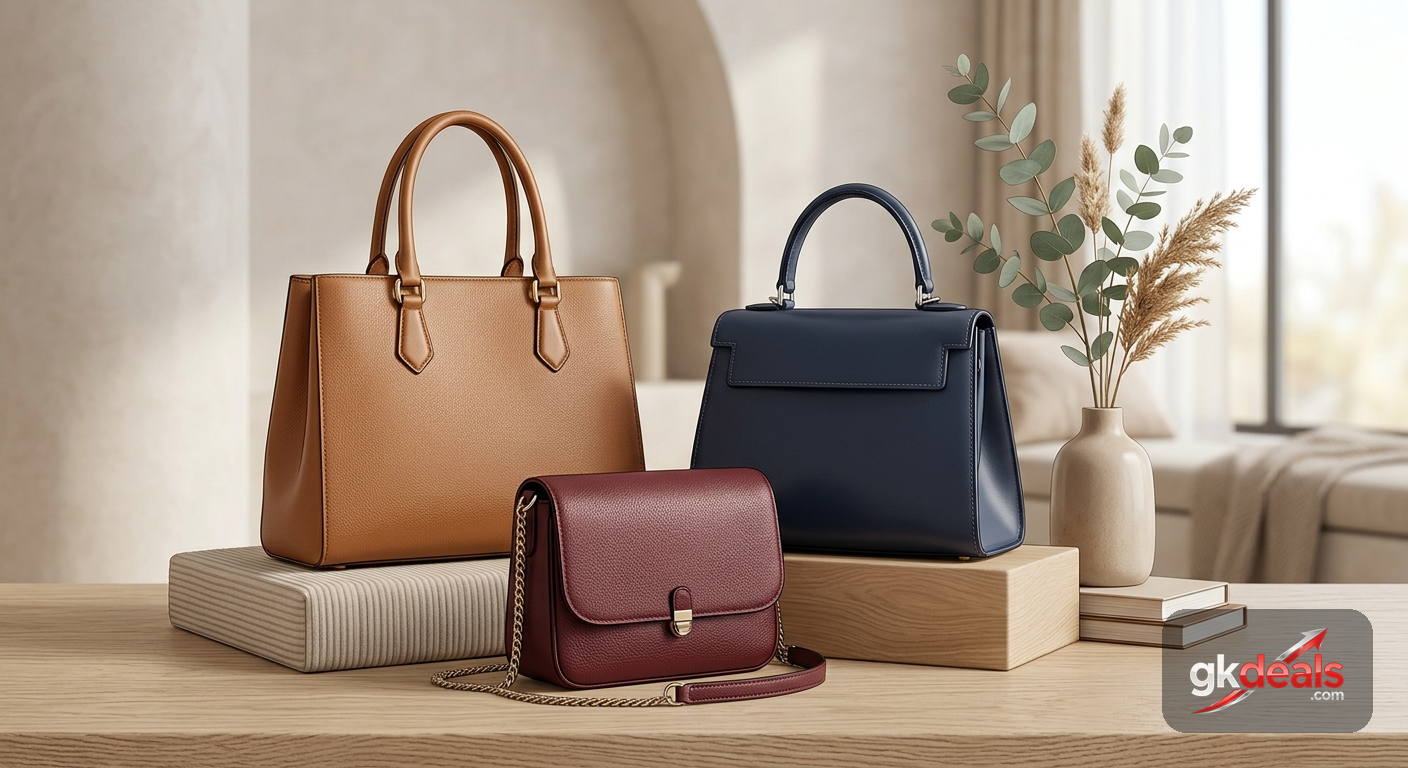
The Beverly Hills Carryall Duffle Leather Bag in Oxblood Burgundy by Silver & Riley, priced at $1,295, suits the buyer who wants a luxurious carry-all with a rich, statement-making color and the kind of presence that works for busy days or polished travel.
Shop at Silver & Riley · $1,295 →
The Classic New Yorker Bag in Astoria Noir Black - Gold Hardware by Silver & Riley, priced at $1,295, suits someone looking for a structured, versatile option with classic city polish and the added warmth of gold hardware.
Shop at Silver & Riley · $1,295 →
The Classic New Yorker Bag in SoHo Red - Gold Hardware by Silver & Riley, priced at $1,295, suits the buyer who wants the same structured sophistication in a bolder, more fashion-forward shade.
Shop at Silver & Riley · $1,295 →
The Classic New Yorker Bag in Carnegie Merlot - Gold Hardware by Silver & Riley, priced at $1,295, suits someone drawn to a refined, deep-toned alternative that feels especially rich and elegant.
Shop at Silver & Riley · $1,295 →Is It Worth It?
A luxury leather bag over $1,000 is worth it when the price buys a complete experience: a silhouette that fits your life, leather that looks and feels elevated, hardware that enhances the design, and construction that inspires confidence. What you are really paying for is not simply status, but the successful combination of tactile pleasure, visual sophistication, and reliable performance over time.
That said, value is highly personal. If you rotate bags frequently, prioritize novelty, or need something rugged above all else, the jump past $1,000 may not deliver proportionate satisfaction. But if you prefer fewer, better accessories and want a bag that meaningfully elevates your wardrobe every time you carry it, this tier can make sense. The smartest luxury purchase is rarely the flashiest one; it is the one whose quality, shape, and function continue to feel right long after the unboxing moment has passed.
For many buyers, the strongest approach is to choose the silhouette first and the color second. If your life calls for one polished workhorse, a carry-all can be the most rational luxury. If you want a wardrobe anchor with day-to-night range, a structured city bag may offer the better return. In either case, a bag at $1,295 should make its value legible not just in appearance, but in daily ease and enduring appeal.
We may earn a commission if you buy through these links, at no extra cost to you.