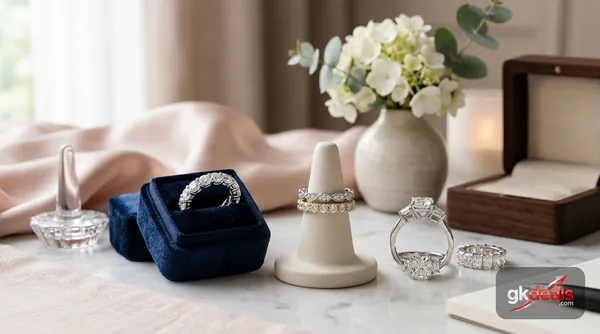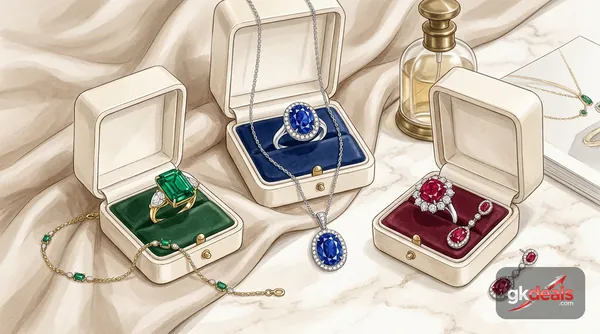

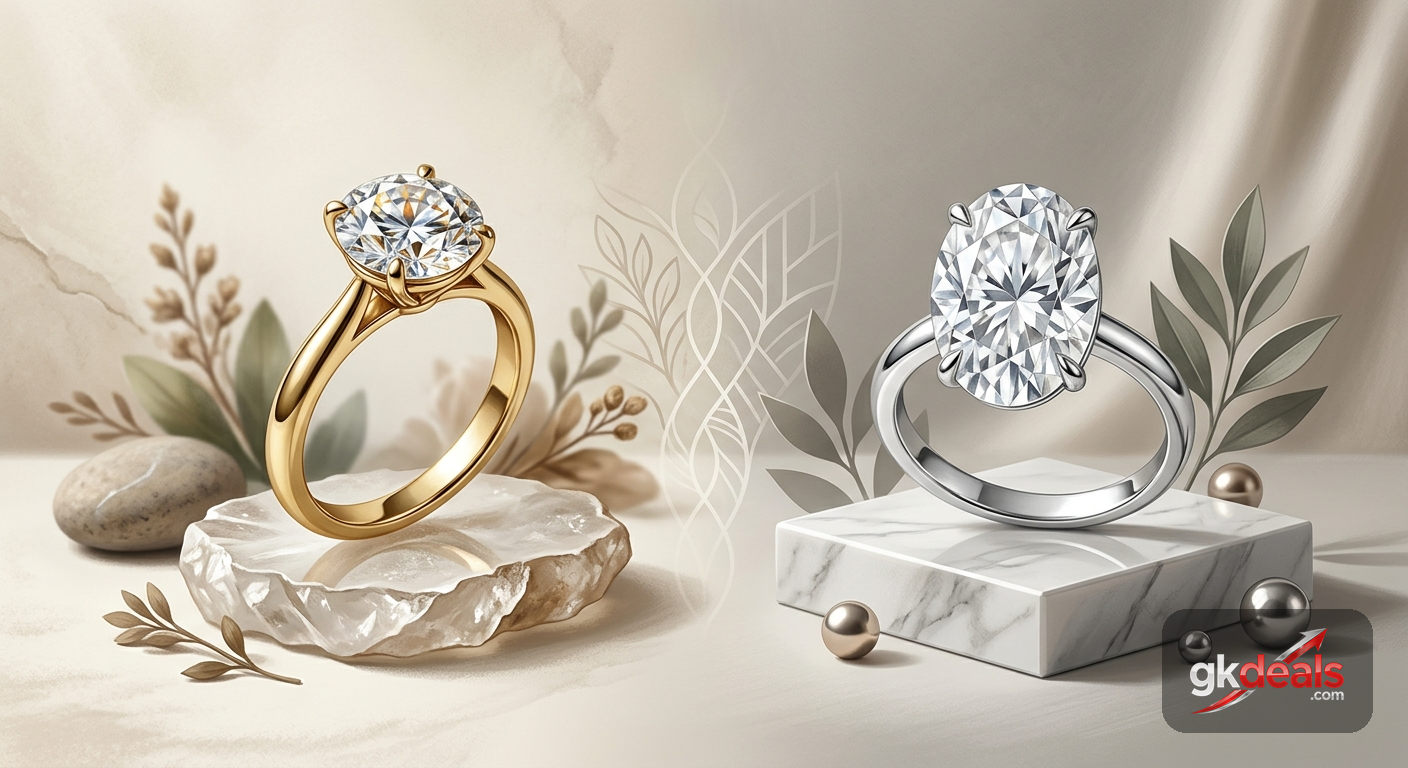
Once your engagement ring budget moves beyond $1,000, the conversation becomes less about finding something simply beautiful and more about choosing the right balance of stone type, design, scale and long-term wearability. This is where shoppers often weigh lab-grown versus natural diamonds, consider coloured centre stones such as sapphire or emerald, and pay closer attention to the setting details that shape both look and value.
The good news is that this price point offers real variety. You can lean classic with a solitaire, embrace the regal appeal of a halo, or make colour the focal point with a blue sapphire or green emerald centre stone. The key is understanding what you are prioritising: size, symbolism, colour, sparkle, or a specific silhouette that feels personal.
Why the $1,000-Plus Category Feels Different
Above $1,000, engagement rings tend to deliver more distinction in design. Instead of choosing only between basic shapes, you start to see statement details such as halos, split shanks, bypass bands and accent stones that noticeably change the ring’s personality. This is also a range where comparing lab-grown and natural options becomes especially relevant, because the design you want may look quite different in price depending on the type of centre stone.
At this level, shoppers are often trying to answer a few practical questions at once. Do you want the most visual impact for the spend? Is a classic diamond non-negotiable? Would a coloured gemstone feel more individual? Are you buying for everyday wear, or for a very specific aesthetic inspired by vintage or royal jewellery? Those answers matter more than simply chasing the biggest headline look.
- Lab-grown options can open the door to more elaborate looks at a lower price than comparable natural styles.
- Natural diamond and gemstone rings often appeal to shoppers focused on traditional rarity and classic expectations.
- Coloured centre stones can make a ring feel more distinctive without relying on a standard all-diamond look.
- Settings such as halos and split shanks can dramatically affect presence, even before you compare centre stones.
Lab-Grown vs Natural: What Changes in the Real-World Shop
For many buyers, the lab-grown versus natural question is less abstract than it sounds. In practice, it usually affects how much ring design you can access at a given budget. If your goal is to maximise visual scale or secure a style with multiple accent stones, a lab-grown ring may allow more room to do that while staying within the same spending bracket.
Natural options, on the other hand, tend to appeal to buyers who want a more traditional route and are comfortable paying more for that distinction. In a shopping basket filled with halo settings and coloured centres, the price difference between lab-grown and natural can be especially visible. A royal-inspired sapphire halo ring, for example, reads very differently at around the mid-$4,000s than it does above $6,000, even when the design language is similar.
That said, the better choice is not universal. Some buyers would rather put their budget toward a natural centre stone or diamond accents because the symbolism matters to them. Others care more about reaching a certain look without stretching to the next spending tier. There is no single correct answer; there is only the ring that best matches your values and preferred aesthetic.
Coloured Centre Stones: Sapphire and Emerald Appeal
If you want your engagement ring to stand apart from the usual white-diamond solitaire, coloured centre stones are often the fastest route to individuality. Blue sapphire remains one of the most recognisable and enduring choices, particularly in halo settings that emphasise contrast and a rich central hue. Emerald, meanwhile, offers a striking green focal point that feels elegant and a little less expected.
Within this category, shape plays a big role. Oval centre stones tend to look graceful and elongating on the hand, while a more iconic inspiration piece built around a halo can feel grander and more formal. Colour also changes how the ring interacts with accent stones. A sapphire framed by diamonds feels crisp and dramatic, while an emerald halo ring often reads lush and vivid.
Choosing a coloured centre stone can also be a smart way to focus your budget on personality rather than convention. If you already know that a standard diamond solitaire feels too predictable for the wearer, a sapphire or emerald engagement ring may simply make more emotional sense.
How Settings Shape the Final Look
Setting style is often the detail buyers underestimate most. Yet it can completely change how large, refined or contemporary a ring appears. Halo settings are especially effective if you want a centre stone to feel more pronounced and framed. They naturally suit statement styles, including those inspired by historic or royal designs.
Solitaire settings move in the opposite direction, putting visual focus on the centre stone with less distraction. They are ideal for shoppers who want something timeless and easy to wear day after day. Even within solitaires, however, band design matters. A bypass silhouette introduces movement and a more modern line, while a split shank adds width and presence without necessarily abandoning a classic feel.
Accent stones sit somewhere between the two. They can add sparkle and dimension without creating the full visual outline of a halo. If you want a ring that feels elevated but not overly formal, a design with diamond accents can be a strong middle ground.
- Halo settings suit buyers who want drama, framing and maximum visual impact.
- Solitaire settings suit buyers who prefer clean lines and a classic profile.
- Split shanks can make a ring feel more substantial and decorative.
- Bypass bands offer a softer, more fluid and contemporary silhouette.
- Accent stones add detail without making the design as bold as a halo.
Budgeting Above $1,000 Without Overspending
A larger budget does not automatically mean you should spend at the very top of your comfort zone. In engagement rings, it is often more useful to define what you care about most before you compare prices. If your priority is a statement sapphire ring with a halo, you may decide that spending over $4,000 is justified for the exact style you love. If your priority is a smart entry into fine-jewellery engagement rings above $1,000, a lab-grown diamond solitaire under $2,000 may feel like the sharper buy.
It also helps to organise your thinking by rank order. Start with centre stone preference, then design style, then how much ornamentation you want from accents or halo work. That prevents you from paying more for features you do not truly value. In practical terms, a buyer who wants a coloured centre stone and a distinctive silhouette may get more satisfaction from a lab-grown sapphire split shank ring than from stretching for a more traditional option that does not feel as personal.
Price differences within this guide make that point clearly. There are compelling options starting at $1,799 and extending to $6,119, and each one serves a different type of shopper rather than representing a simple better-or-worse hierarchy.
Our Picks
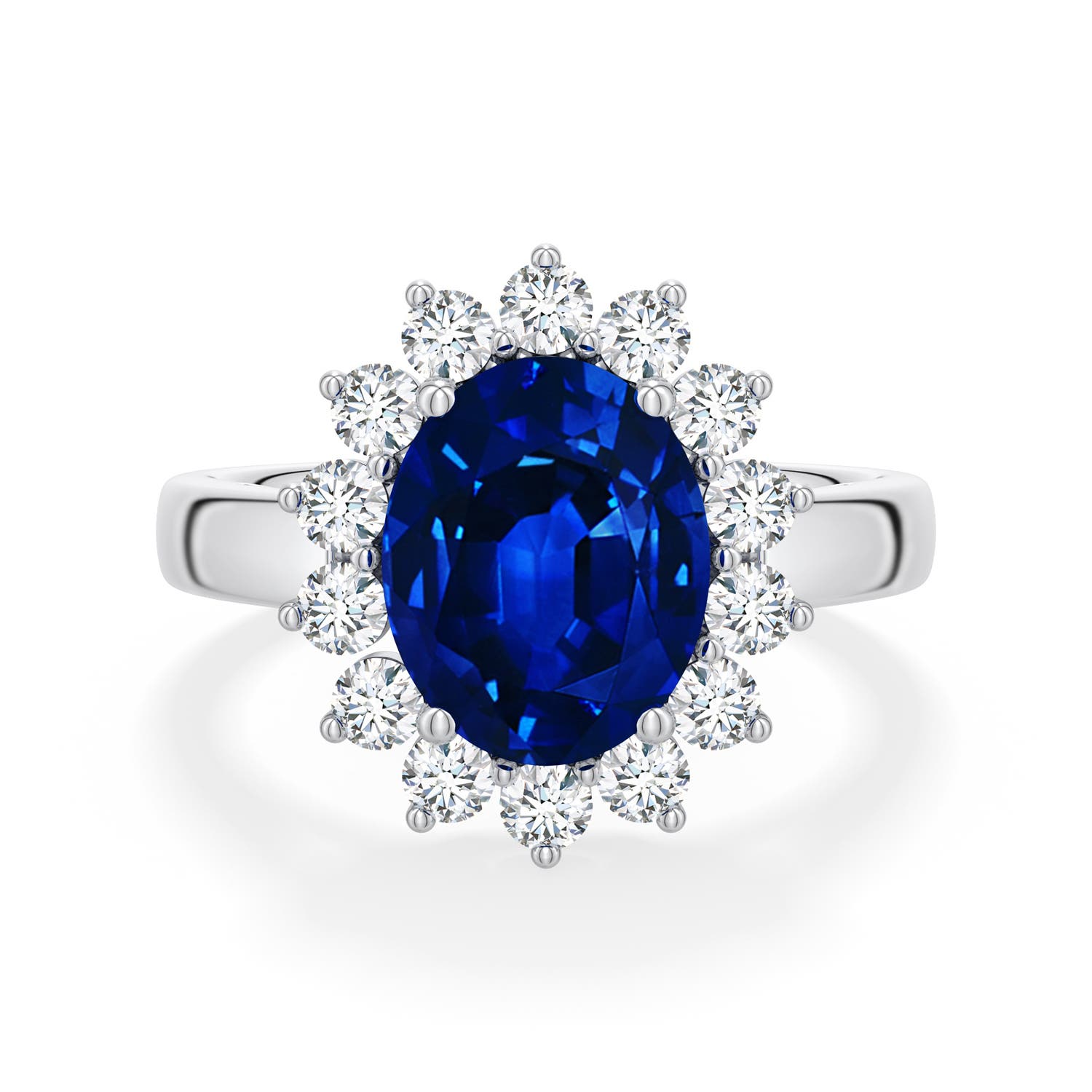
Lab-Grown Princess Diana Inspired Blue Sapphire Engagement Ring with Lab Diamond Halo by Angara — $4,382: This suits the buyer who loves a regal, iconic sapphire look and wants a lab-grown route to a high-impact halo design.
Shop at Angara · $4,382 →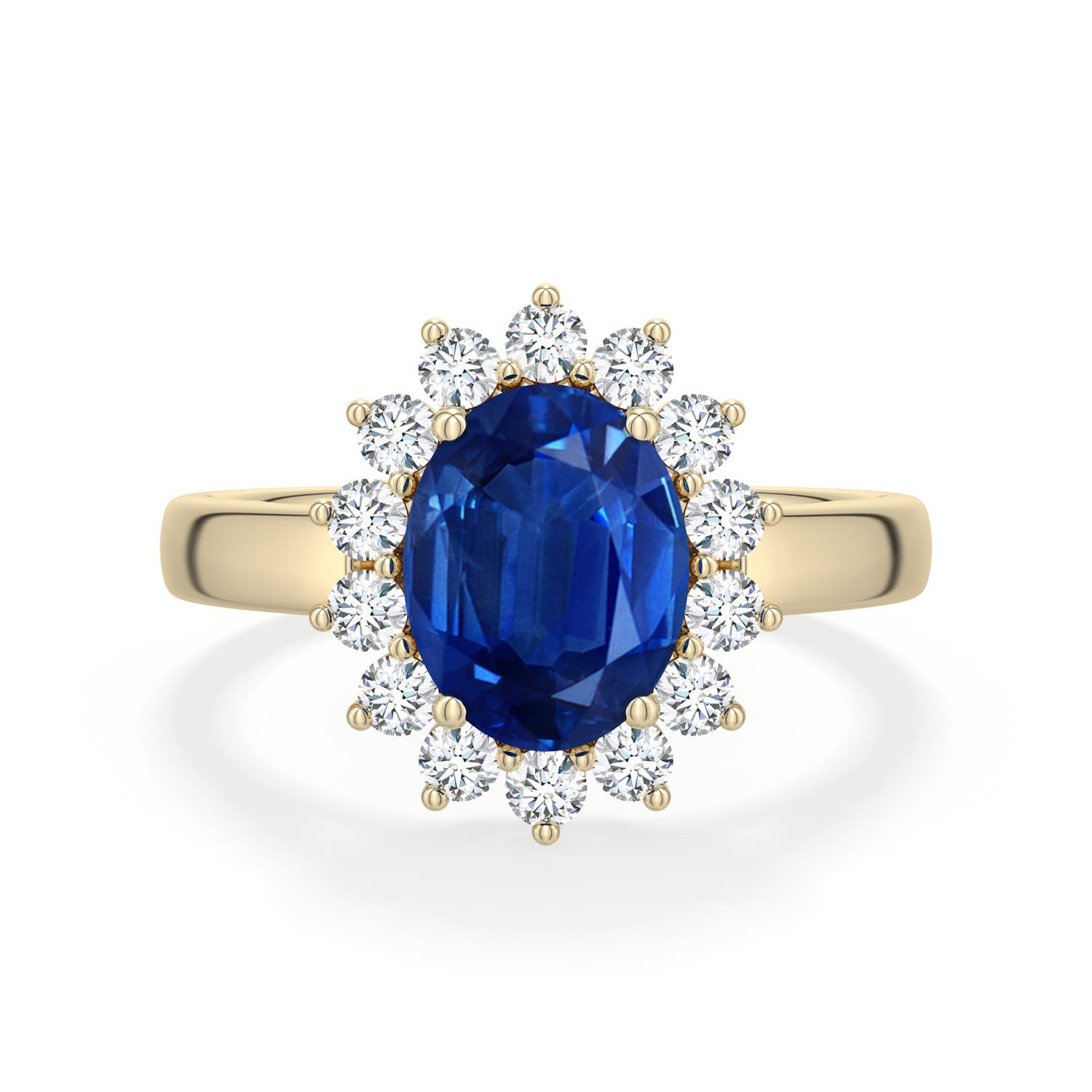
Princess Diana Inspired Blue Sapphire Engagement Ring with Diamond Halo by Angara — $6,119: This suits someone drawn to the same famous-inspired silhouette but who prefers a natural version and is comfortable with a higher spend.
Shop at Angara · $6,119 →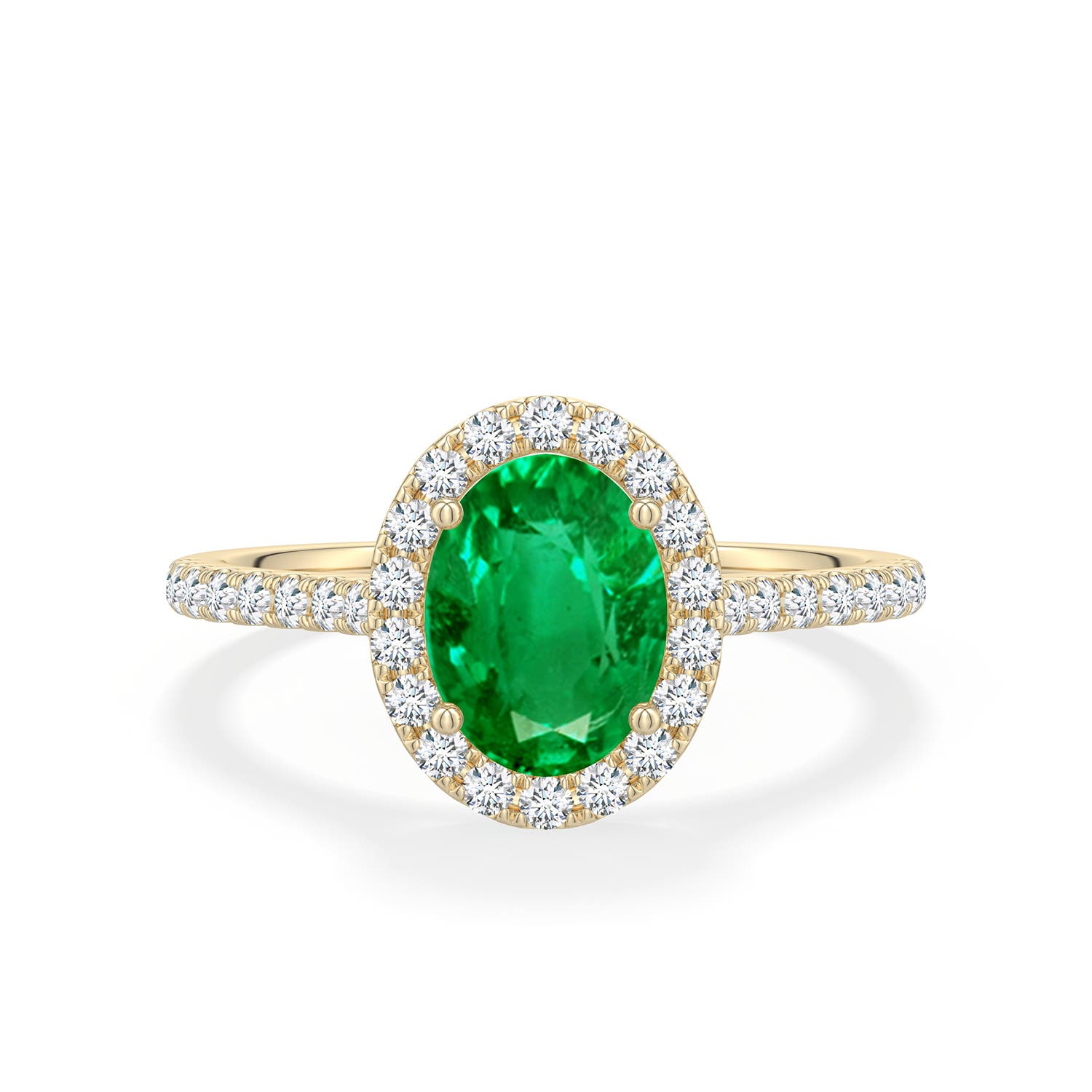
Prong-Set Oval Emerald Halo Engagement Ring with Diamond Accents by Angara — $2,996: This suits the shopper who wants a coloured centre stone that feels elegant, vivid and slightly less conventional than sapphire.
Shop at Angara · $2,996 →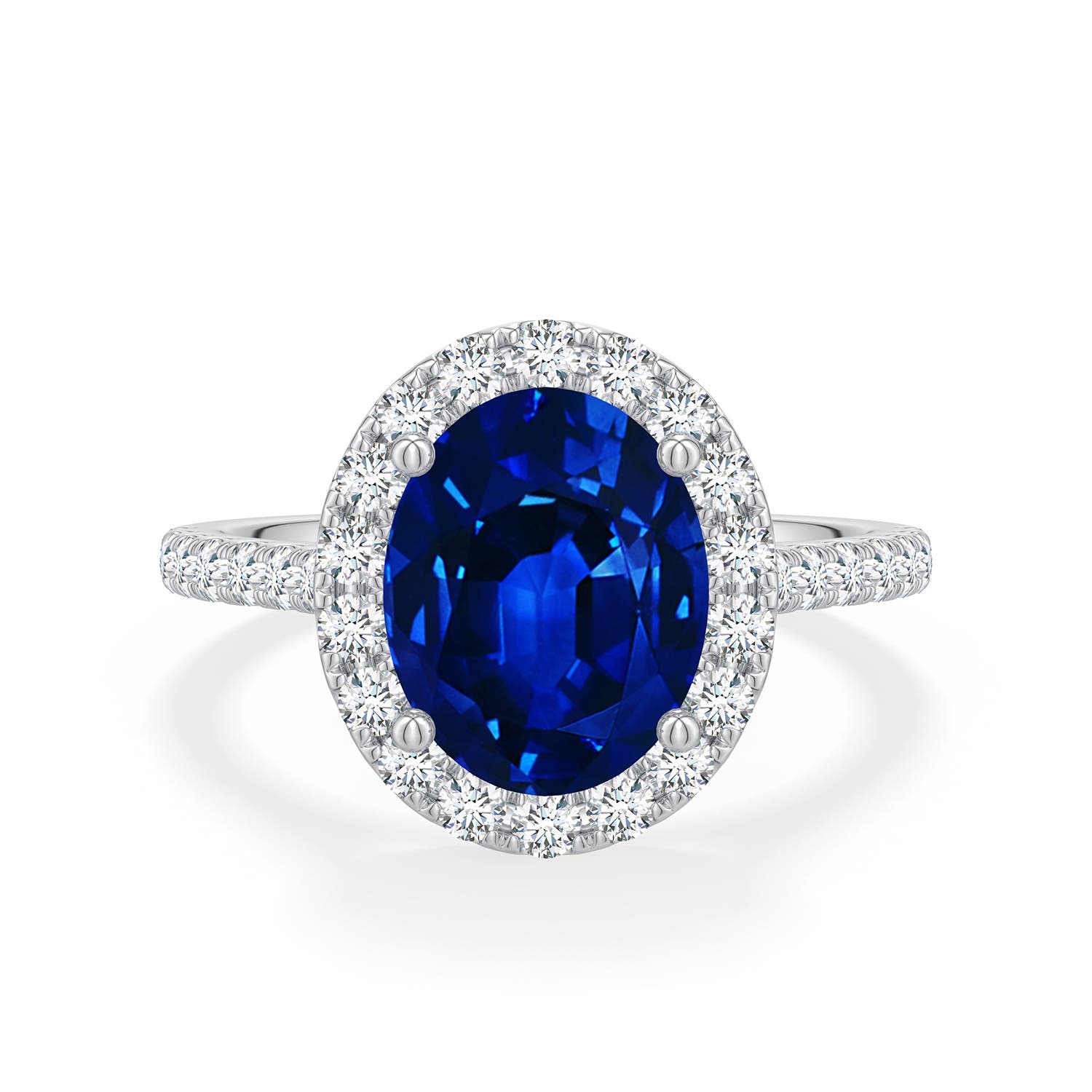
Prong-Set Oval Lab-Grown Sapphire Halo Engagement Ring with Diamond Accents by Angara — $3,536: This suits someone who wants the romance of an oval sapphire halo with a lab-grown centre stone and a strong balance of colour and sparkle.
Shop at Angara · $3,536 →
Lab-Grown Solitaire Oval Blue Sapphire Split Shank Engagement Ring with Trio Lab Diamonds by Angara — $1,889: This suits the buyer seeking a more streamlined sapphire style with subtle extra detail from the split shank and trio side stones.
Shop at Angara · $1,889 →
Lab-Grown Classic Round Diamond Solitaire Bypass Engagement Ring by Angara — $1,799: This suits the minimalist who wants a classic diamond solitaire feel with a slightly more contemporary bypass twist.
Shop at Angara · $1,799 →Is It Worth It?
Yes, an engagement ring over $1,000 can absolutely be worth it if the extra spend is buying you the right combination of centre stone, setting and personal meaning. This category offers enough range to make your money feel intentional rather than merely higher. You are not just paying more; you are choosing between very different experiences, from classic round diamond solitaires to richly coloured sapphire and emerald statement rings.
The smartest way to judge value is to match the ring to the wearer’s priorities. If timeless simplicity matters most, a clean lab-grown diamond solitaire can be a strong buy without overspending. If colour, romance and a grander look are the goal, sapphire or emerald halo designs may justify the jump in price. And if you are comparing lab-grown with natural, the question is not which is universally better, but which option gets you closest to the design and symbolism you want at a budget you feel good about.
In other words, above $1,000 is where engagement ring shopping becomes more expressive. Spend carefully, choose the design details that really matter to you, and the right ring can feel every bit as special as the occasion it marks.
We may earn a commission if you buy through these links, at no extra cost to you.